
How Leadership Can Benefit from the Behavioral Health Digital Boon
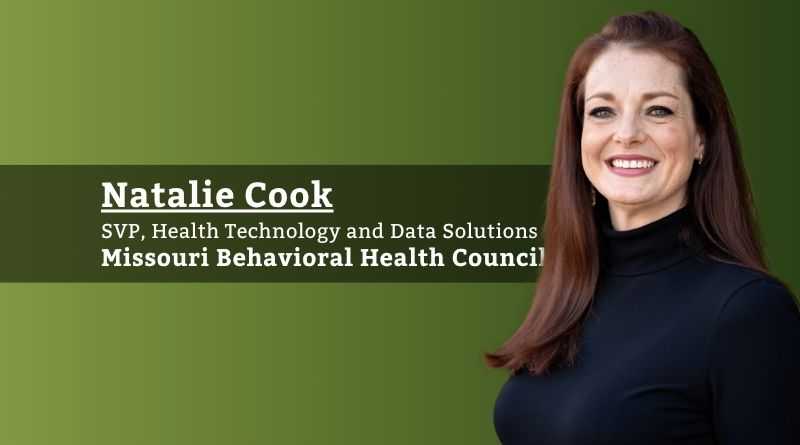
By Natalie Cook, MS, SVP, Health Technology and Data Solutions, Missouri Behavioral Health Council
If you work in a leadership position in the behavioral health field, you have likely been bombarded by vendors offering you the latest and greatest in digital innovation- all guaranteed to make your life/practice/business better. Software, apps, digital platforms, and AI are all flooding our field. How do you weed through emails, sales pitches, and promises to find tech that will truly impact behavioral health for the better?
When it feels like our healthcare field is the last to get the tech attention it has always deserved, we can quickly jump at the opportunity to join others in the ranks of the digital windfall. And I’m not necessarily talking about revolutionary ideas. Something as basic as an electronic health record (EHR) remains out of reach for many in the nonprofit behavioral health sector. Where should you invest your limited resources, and what technology gives the highest return on investment (ROI)?
At the state or county level, think big. Population health platforms can give boots-on-the-ground staff the health information they need to quickly and easily identify individuals who need an intervention. The return here is healthier individuals and upstream savings from higher-cost services (think connecting with a primary care physician and filling prescriptions rather than emergency department visits and hospitalizations). These systems have significant staffing and funding investments, but many state leaders have seen the positive impact they can have. Look for partnerships with stakeholders to fund shared system investments. A well-written business associate agreement (BAA) can cover all entities and allow data sharing for care coordination.
Technology is intended to make our lives easier, but that doesn’t mean we should ignore the risks involved. Smart leaders are thoughtful and well-prepared when implementing new technology.
Larger organizations can save administrative costs by utilizing automated phone systems that leverage AI to screen callers, collect insurance information, and schedule intake appointments. Instead of human call centers collecting this information, think of Siri or Alexa using language modeling to greet callers, collect basic demographic data, and search schedules for available appointments. There should still be the option to talk to a real person, if that is an individual’s choice. These products are not meant to handle crisis calls or emergencies, so there will always be situations where a human needs to take over. Look for products that demonstrate safety guardrails and are approved by the U.S. Food and Drug Administration (FDA).
For smaller organizations, big returns are seen with ambient AI documentation tools. The market has been flooded with these products in the past five years. Most EHRs have the option to purchase ambient scribe documentation tools within the platform. There are also companies offering EHR-agnostic products that lie on top of the EHR of your choice. The potential here is that direct care staff can significantly reduce documentation time, in turn reducing clinician burnout and increasing job satisfaction. The prospective return is lower staff turnover and higher quality progress notes. Clinicians report being able to focus more on clinical care and outcomes since the tool automatically drafts a progress note at the end of each session. Some of these tools will track how often and how well clinicians use evidence-based practices such as motivational interviewing. Clinical supervisors can use reports generated for each clinician to focus their supervision time on building a stronger, more competent behavioral health workforce.
All practices, large or small, can benefit from revenue cycle management (RCM) software. These products aim to eliminate manual errors in billing and claims processing. Like ambient AI documentation tools, many EHRs offer RCM software, and likewise, many RCM software products are interoperable with any EHR system. RCM products are intended to reduce the time from service to payment and create operational efficiencies, such as automatic eligibility and benefits verification. This allows staff to focus on the most complex cases and direct patient engagement, rather than on manual data entry.
Before you dive into purchasing any behavioral healthcare technology, do your research. Legitimate companies will be willing to provide references from current customers. Both satisfied and dissatisfied customers are more than willing to share their experiences. Ask questions related to any concerns you have. Others have likely experienced the same concerns and can share how those worked out for them. Healthcare tools should always be HIPAA-compliant, and in some cases, must be FDA-approved. If you are using AI for clinical documentation, you should also have a policy on patient consent and a clear understanding of how session recordings are stored.
Speaking of policies, having clearly outlined data governance and AI governance policies is crucial. Cybersecurity insurance may also be required and is certainly recommended. Technology is intended to make our lives easier, but that doesn’t mean we should ignore the risks involved. Smart leaders are thoughtful and well-prepared when implementing new technology. Developing policies and procedures, outlining an implementation plan, and thoroughly training staff will go a long way in protecting the integrity of your data and ensuring a smooth rollout of new systems and workflows.