Making Revenue Cycle Work Smarter
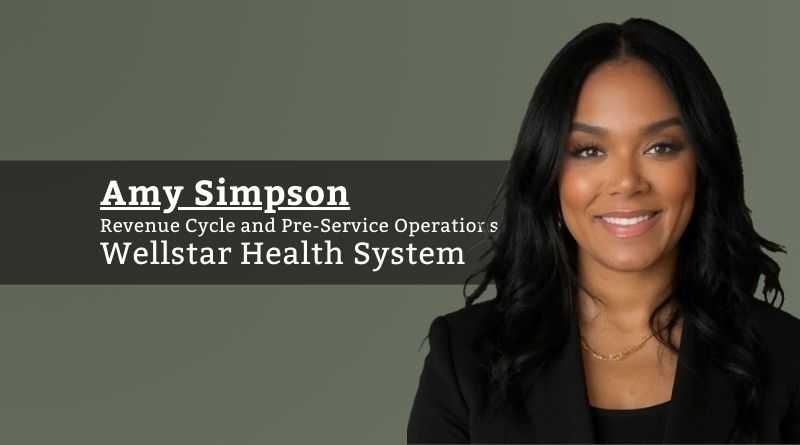
By Amy Simpson, Revenue Cycle/Pre-Service Operations Director, Wellstar Health System
Automation has transitioned from a future consideration to an essential component across all facets of the revenue cycle. The integration of automation platforms is critical for scalable healthcare organizations, necessitating thoughtful strategies for continuous improvement. Artificial intelligence (AI), automation, and advanced data analytics now play pivotal roles in optimizing the revenue cycle for both front-end and back-end users. These technologies systematically address inefficiencies, enable cost scaling, minimize waste, and strengthen financial performance, all while supporting enhanced patient experiences.
Implementation of automation typically begins with the identification of the manual, repetitive, and high-volume tasks—those best suited for technological intervention. Through comprehensive assessments, organizations can prioritize automation opportunities across the front end, mid-cycle, and back end of the revenue cycle. This prioritization ensures that investments in automation tools target areas with the potential for the highest returns, both financially and operationally. Integration may require deploying new systems or leveraging underused functionalities within existing enterprise software, ultimately decreasing manual workloads and enabling staff to focus on higher-value and more complex tasks.
If it’s repetitive, manual, and rules-based, automate it. If it needs judgment, empathy, or clinical knowledge, keep it with people.
Front-End Revenue Cycle
Front-end operational activities, including eligibility and benefits verification, patient access and scheduling, and financial clearance, are ideal for automation. AI-powered bots verify insurance details, minimizing human error and reducing claim denials due to incorrect information. Many electronic medical record (EMR) systems offer embedded features to automate essential administrative steps, such as real-time insurance eligibility, estimate generation, and hospital account record (HAR) creation, which help control costs by decreasing reliance on manual processing. Predictive analytics and machine learning (ML) models further enhance capabilities by generating more accurate out-of-pocket cost estimates, advancing price transparency initiatives, and optimizing appointment scheduling. Automated reminders, real-time payment estimate tools, chatbot-driven payment plan options, and customized communication strategies collectively contribute to higher provider utilization rates and improved patient collection outcomes. Additionally, pre-service authorization automation mitigates downstream denial risks, increases team productivity, and reduces turnaround times for approvals, which supports a broader operational scope and improved patient satisfaction.
Mid-Cycle (Clinical Documentation & Charge Capture)
During the mid-cycle, the focus shifts to clinical documentation improvement (CDI) and precise charge capture. Natural language processing (NLP) algorithms review clinician notes in real time, flagging incomplete, ambiguous, or non-compliant entries before billing occurs. By automating these reviews, organizations reduce the risk of coding and documentation errors while ensuring regulatory adherence and revenue integrity. Advanced AI solutions propose accurate medical codes based on clinical documentation, providing a safeguard against reimbursement delays or denials, and promoting overall compliance and audit readiness.
Back-End (Claims, Billing & Collections)
On the back end, the incorporation of predictive analytics and processing automation into denial management, collections, accounts receivable, and cash posting delivers substantial gains. Analytics tools identify claims at risk for denial and facilitate immediate resolution through automated error correction. ML continuously analyzes denial patterns, generating insights that drive improvements upstream in the revenue cycle. Predictive models forecast payment likelihood, allowing organizations to tailor outreach strategies and maximize collection rates. Robotic process automation (RPA) adeptly handles tasks such as payer follow-up, remittance matching, and systematic posting, thereby lowering error rates and expediting cash flow.
Strategic & Operational Insights
Beyond automating discrete tasks, AI and analytics equip leaders with strategic and operational intelligence through customizable dashboards, predictive forecasting, and ongoing compliance monitoring. Real-time analytics provide up-to-date reports on key performance indicators (KPIs), including accounts receivable days, denial rates, and net collection ratios, empowering organizations to intervene proactively when workflow inefficiencies emerge. Advanced modeling can anticipate changes in reimbursement structures, shifts in care incentives, and evolving patient demographics, all of which inform robust contract negotiation and management strategies. Furthermore, AI-driven auditing tools enhance regulatory compliance by detecting irregular billing patterns and logging detailed audit trails for accountability and oversight.
Implementation Considerations and Organizational Impact
Successful adoption of automation in the revenue cycle requires thoughtful change management, rigorous data governance, and ongoing evaluation to ensure continued alignment with organizational goals. Essential elements include staff training, stakeholder engagement, and precise measurement of automation’s impact on both operational metrics and patient-centered outcomes. When integrated effectively, these technologies foster a culture of continuous improvement, enabling organizations to keep pace with regulatory changes, industry standards, and market competition.
In summary, the strategic application of AI, automation, and data analytics transforms the healthcare revenue cycle by driving operational excellence, accelerating cash flow, and bolstering financial sustainability. These tools help reduce denials, speed up collections, increase clean claim rates, and optimize revenue capture, ultimately enhancing the organization’s ability to deliver high-quality care. If it’s repetitive, manual, and rules-based, automate it. If it needs judgment, empathy, or clinical knowledge, keep it with people. Healthcare organizations that properly incorporate and leverage these advancements position themselves to thrive in an increasingly complex and competitive environment.