The Virtual Pivot: Reformulating Nursing Care Through Remote Health Monitoring
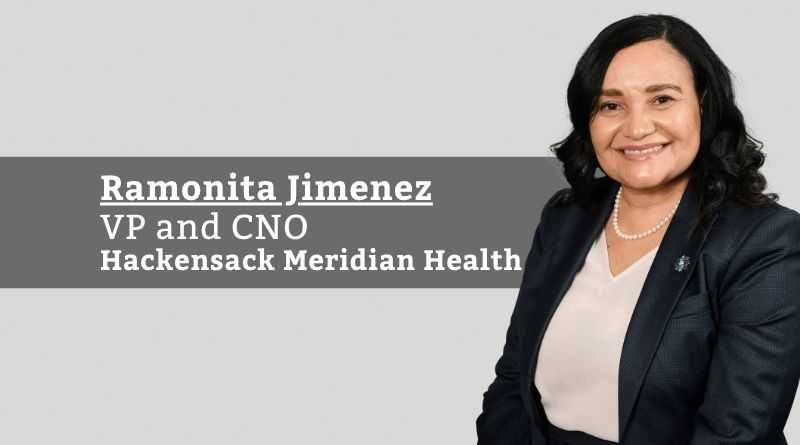
By Ramonita Jimenez, VP and CNO, and Claudia Douglas, Nursing Management Consultant, Hackensack Meridian Health
The healthcare landscape is currently navigating a period of profound transformation. For decades, nursing care delivery models (CDMs) have served as the fundamental framework for planning, assessing, and delivering care. Yet these models—ranging from functional and team nursing to the primary nursing model popularized in the 1970s —were historically developed in response to economic and political shifts rather than to rigorous empirical validation. Today, as nursing leadership faces an unprecedented global shortage and a high-velocity digital era, the traditional “four walls” of the hospital are no longer sufficient to contain the evolving needs of patient care. We are witnessing a “Virtual Pivot,” a necessary reformulation of nursing care that leverages technology to bridge the gap between traditional bedside practice and the future of healthcare.
For too long, CDMs have been viewed through a static lens, often tethered to the nurse’s physical presence at the bedside. However, the integration of telehealth and remote patient monitoring (RPM) into a unified hybrid care system is expanding the boundaries of nursing care beyond physical hospital units. This shift is not merely a digital overlay on existing practices; it is a fundamental transformation of how care is conceptualized and delivered. By extending the nurse’s reach into the virtual realm, we are pioneering groundbreaking innovations in care delivery that were previously unimaginable, creating a seamless digital-to-physical continuum in real-time care at the point of care, where it matters most. Thus, this hybrid approach enables a more agile, dynamic CDM.
By shifting surveillance tasks to virtual space, the bedside nurse is “returned” to the patient, restoring the human connection and the “heart of caring,” the hallmark of nursing that defines the profession.
According to the American Nurses Association (ANA), the emergence of telehealth models is inextricably linked to improving community health and organizational outcomes. When care is no longer restricted by geography, nursing practice becomes a more durable and collaborative force, highly responsive to real-time patient needs. This augments the nurse’s role as a holistic care coordinator, leveraging digital tools to maintain a 360-degree view of the patient’s condition and ensure high-level clinical oversight regardless of physical location. By utilizing these platforms, the nurse’s role as a strategic care partner is amplified, providing a comprehensive perspective that integrates real-time data into the plan of care.
A critical component of this virtual pivot is the effectiveness of bedside RPM. In a traditional primary nursing model, the responsibility for identifying patient decline rests solely on the individual nurse’s assessment during specific intervals. Incorporating this remote telepresence shifts interventions from a reactive to a proactive stance, bringing to the nurse’s attention patients most at risk of an adverse event before it occurs. This “digital safety net” empowers nurses with actionable insights, ensuring that human intervention is directed where it is most urgently needed. This integration addresses a long-standing question regarding the efficacy of nursing models: how to optimize human resource allocation without compromising patient safety.
Acting as a force multiplier, RPM provides an innovative solution to bridge this experience gap. While many veteran nurses may no longer be able to deliver physically demanding direct care, their invaluable knowledge—often underutilized—can now be shared virtually to mentor less experienced staff. This ensures that clinical wisdom remains a central pillar of quality patient care. Through high-definition telepresence, these “virtual mentors” provide real-time guidance and “elbow support” to newer nurses. This allows a novice nurse immediate access to a veteran’s intuition during complex procedures or critical decision-making moments. This model optimizes workforce capability and capacity; research has shown a 43.1% increase in nurse availability for direct care when supported by such virtual pivots. By shifting surveillance tasks to virtual space, the bedside nurse is “returned” to the patient, restoring the human connection and the “heart of caring,” the hallmark of nursing that defines the profession.
In many traditional hospital designs, the unit’s geographic layout creates inherent blind spots, making it difficult for bedside nurses to maintain constant awareness of every patient room simultaneously. This “safety gap” is most acute when managing agitated or high-risk patients who require vigilant observation. RPM bridges this gap by acting as a digital eye, providing a continuous safety net that transcends physical walls. By streamlining high-stakes tasks like admissions, discharge planning, and documentation, RPM empowers nurses to exercise greater professional autonomy while ensuring that no patient is ever truly out of sight. This real-time visibility allows the virtual team to alert the bedside nurse the moment a safety risk arises, transforming a fragmented unit layout into a seamlessly monitored environment.
The “Virtual Pivot” addresses the economic imperative by maximizing resource utilization and workflow efficiency and includes a virtual tier. Organizations can mitigate the high staffing requirements that often make traditional models difficult to sustain during shortages, aligning with the transition toward value-based care (VBC), in which outcomes and patient satisfaction drive reimbursement, enabling hospitals to achieve tangible improvements in key performance indicators (KPIs) and quality of care.
Historically, CDMs have been a linchpin of healthcare fiscal expenditure. The absence of empirical rigor in evaluating CDMs has left nursing leadership struggling to find models that balance fiscal constraints with quality outcomes. The transition toward hybrid, remote-enabled monitoring represents the most significant shift in care delivery since the inception of primary nursing in the 1970s. This is more than a technological upgrade; it is a redefinition of nursing identity. By embracing the virtual pivot, healthcare organizations can create a care delivery model that is agile, durable, and deeply human. We are no longer just planning for a shortage; we are designing a future where nursing care is omnipresent, intelligent, and expertly mentored.