From Pilots to Statewide Scale: Building the Next Generation of Remote Health Monitoring at University of Maryland Medical System
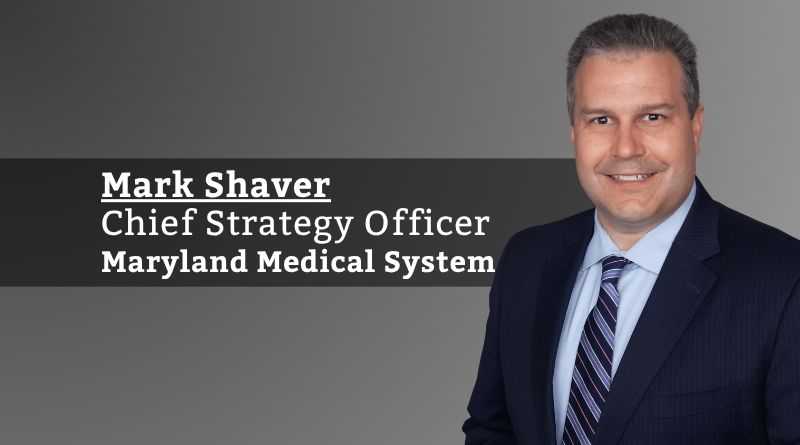
By Mark Shaver, Chief Strategy Officer, University of Maryland Medical System
As the newly appointed Chief Strategy Officer at the University of Maryland Medical System (UMMS), I have the privilege of helping lead strategy for one of the most dynamic healthcare environments in the country. UMMS is a nearly $6 billion private, non-profit academic health system affiliated with the University of Maryland School of Medicine—the oldest public medical school in the United States.
With more than 25 percent of the state’s hospital-based acute care delivered in our hospitals, UMMS touches nearly every corner of the state, from dense urban neighborhoods in Baltimore City to the suburbs in multiple counties to deeply rural communities on the Eastern Shore. Few health systems in the nation operate at this scale while simultaneously preparing to enter one of the first statewide AHEAD (Achieving Healthcare Efficiency through Accountable Design) value-based payment models with the Centers for Medicare & Medicaid Innovation.
That statewide reach has shaped our core thesis for remote health monitoring (RHM): The time has come to move from individual regional deployments to a coordinated, enterprise-level and ultimately statewide strategy.
For UMMS, remote monitoring is not a technology program – it is a care-delivery transformation strategy. Our goal is patient-centered: deliver timely, coordinated, proactive care that keeps people healthy at home, reduces unnecessary hospital utilization and ensures that geography or zip code is never a barrier to receiving the right level of care.
We see RHM as the missing middle layer—filling the gap between episodic ambulatory care and high-acuity inpatient settings.
Defining the Role of Remote Monitoring in Patient-Centered Care
Remote monitoring has played a crucial role in addressing two persistent challenges across our diverse markets:
- Timely intervention for high-risk patients, particularly those with chronic diseases who frequently require acute services.
- Coordinated handoffs across the continuum, especially in rural and underserved communities where transportation and access gaps can lead to avoidable deterioration.
One of our earliest success stories came from our northernmost market, where our Comprehensive Care Center built an integrated remote monitoring model for heart failure. By combining connected devices, structured virtual touchpoints, and coordinated care-management workflows, the program achieved a 20 percent reduction in CHF readmissions. Those results proved that remote monitoring can meaningfully shift outcomes when it is embedded into clinical operations – not bolted on as a digital add-on.
This data ultimately fueled a major multi-million-dollar grant to establish the UMMS Comprehensive Heart Failure Network, which will integrate remote monitoring, virtual bridge clinics, community outreach, social-needs screening, care management and supportive housing strategies across the system that enable early intervention and reduce preventable hospitalizations. It represents the blueprint for how UMMS will scale its RHM programs for other chronic conditions across the state.
Scaling Requires Integrated Technology and Strong Data Plumbing
The technologies that matter most to UMMS are not the devices themselves, but the integration layers that make data clinically meaningful. Our Access Center has already built the statewide backbone, including the digital infrastructure build, and the unification of telemedicine, digital consults, and interfacility consultations. Through the Access Center’s digital infrastructure, UMMS coordinates care for cardiology, neurosciences, oncology, orthopedics and emergency transfers across Maryland. This model has helped unify telemedicine, digital consults, interfacility virtual care and over 161,000 virtual visits this year, including the successful expansion of tele-sitter programs and specialty digital consults.
Remote monitoring becomes scalable only when data flows into unified dashboards, triggers actionable insights and connects seamlessly with electronic records, care management platforms and predictive models. Our work in readmission reduction and CHF remote monitoring is already demonstrating measurable ROI through reduced utilization, more predictable staffing needs and improved patient experience. Additionally, our NEST (Remote Fetal Heart Monitoring) program expands our capabilities beyond traditional chronic condition monitoring.
Complementing—Not Replacing—Traditional Care Models
Remote monitoring does not replace traditional care delivery; it extends it. The most effective programs function as hybrid models that blend virtual check-ins, automated alerts, nurse-driven outreach, home-based diagnostics and in-person visits when clinically necessary. We see RHM as the missing middle layer—filling the gap between episodic ambulatory care and high-acuity inpatient settings.
Partnerships That Make RHM Work
UMMS’s remote monitoring strategy relies on collaborative partnerships with:
- Technology vendors, to provide devices and integration platforms
- Payers, particularly Medicaid MCOs, Medicare Advantage plans, and state agencies designing value-based models
- Community organizations, which help address housing, food security, transportation and the social determinants that remote monitoring alone cannot solve.
Maryland’s Total Cost of Care and upcoming AHEAD model create a unique opportunity for health systems and payers to co-invest in virtual infrastructure that improves statewide outcomes.
What Will Differentiate the Leaders in the Next Five Years
Health systems that succeed with remote monitoring will share three characteristics:
- Enterprise-wide integration instead of site-specific pilots
- Data interoperability that makes remote monitoring clinically actionable
- A value-based operating model that rewards keeping patients healthy at home
UMMS is preparing for this future now. By expanding our Access Center capabilities, scaling proven RHM models across our diverse markets, and aligning with the AHEAD model, we are building not just a systemwide infrastructure – but a statewide framework for the future of hybrid patient-centered care in Maryland.