The Future of Remote Monitoring: Innovation Will Separate Health Systems
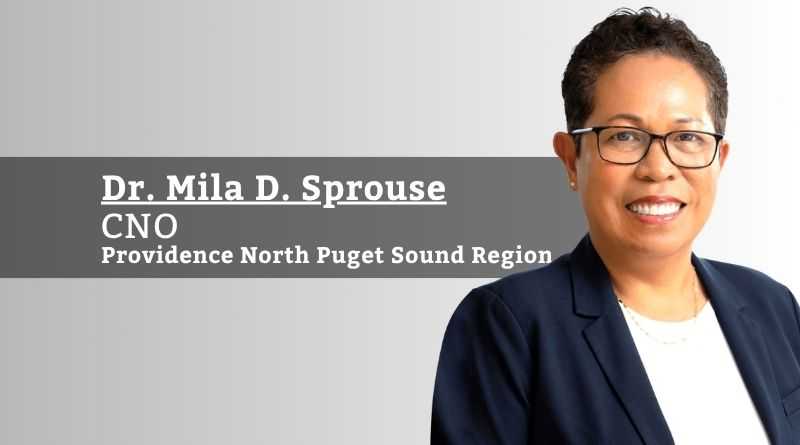
By Dr. Mila D. Sprouse, CNO, Providence North Puget Sound Region
Remote monitoring is entering a decisive chapter. Devices are becoming more sophisticated, analytics are becoming more predictive, and consumer expectations are becoming more demanding. Yet as health systems race to adopt new tools, a critical truth is emerging: remote monitoring will not succeed because of technology alone. It will succeed because of leadership. Over the next five years, the health systems that thrive will be those that pair innovation with humanity—those that understand how to activate technology through purpose, trust and presence.
The first major differentiator will be the ability to turn continuous data into timely clinical action. Remote monitoring generates enormous volumes of information, but without thoughtful clinical pathways, escalation protocols and team-based workflows, data quickly becomes noise. Leading systems will invest in centralized monitoring models, predictive analytics and decision-support tools that strengthen clinical judgment rather than overwhelm it. Innovation here is not about more alerts; it is about clearer signals and faster, safer responses.
Financial strategy will further separate leaders from laggards. High-performing health systems will embed remote monitoring into value-based care models, transitional care pathways and population health strategies. They will align technology adoption with reimbursement, quality outcomes and enterprise priorities. Rather than treating remote monitoring as a pilot or peripheral service, they will position it as a core platform for reducing avoidable hospitalizations, managing chronic disease and extending care beyond traditional walls.
When innovation lacks humanity, care becomes fragmented; when it is grounded in courage, resilience and purpose, it becomes transformative.
Workforce design may be the most underestimated differentiator. Technology cannot scale without people who trust it, understand it and feel supported using it. Health systems that succeed will redesign roles to support virtual nursing, centralized monitoring teams and hybrid models that blend in-person and remote care. They will invest in training clinicians to interpret trends, engage patients virtually and practice at the top of their license. Systems that simply add remote monitoring tasks onto already stretched teams will struggle to sustain momentum.
Patient engagement will define whether remote monitoring delivers meaningful outcomes or limited returns. The most innovative organizations will design experiences that are intuitive, culturally responsive and accessible. They will simplify onboarding, reduce device fatigue and communicate in ways that build understanding rather than confusion. Trust will become a measurable outcome. Health systems that fail to center the patient experience will encounter low adherence, high attrition and minimal clinical impact, regardless of the sophistication of their technology.
Cybersecurity and transparency will also play a defining role. As care increasingly enters the home, the digital perimeter expands dramatically. Leading systems will invest in strong security infrastructure while also communicating clearly with patients about how their data is used and protected. Trust will no longer be assumed; it must be earned continuously. Organizations that treat cybersecurity as a technical issue rather than a relational one will face resistance and reputational risk.
At the center of all these differentiators is leadership philosophy—and this is where the UCTR™ Leadership Framework (Unstoppable Courage to Rise) becomes essential. Grounded in the equation Resilience × Activated Courage, UCTR™ emphasizes that courage must move beyond intention into action. In a remote monitoring environment, activated courage means making decisions amid uncertainty, protecting the human experience during digital transformation, and leading change with clarity rather than fear.
UCTR™ reframes innovation as a leadership responsibility, not a technology project. It challenges leaders to remain present and values-driven while navigating AI, dashboards and virtual workflows. Remote monitoring, by its nature, can create emotional and relational distance. UCTR™ counters that risk by emphasizing communication, trust and connection—ensuring technology enhances care without eroding dignity, clinician confidence or patient relationships.
Health systems guided by UCTR™ principles will approach remote monitoring differently. They will communicate the “why” behind the change, engage frontline teams early and model resilience during transition. They will recognize that innovation fatigue is real and that people—not platforms—determine sustainability. By activating courage, leaders can move teams from skepticism to ownership and from compliance to commitment.
Another defining characteristic of thriving systems will be an innovation mindset rather than a project mindset. The leaders will pilot quickly, learn continuously and scale intentionally. They will partner across disciplines and sectors, welcoming iteration rather than waiting for perfection. Remote monitoring will be viewed as a dynamic ecosystem—supporting hospital-at-home models, chronic disease management (CDM), maternal health and early deterioration detection—rather than a static solution.
Ultimately, success will not belong to the systems with the most devices, but to those with the clearest leadership vision. When innovation lacks humanity, care becomes fragmented; when it is grounded in courage, resilience and purpose, it becomes transformative. Over the next five years, health systems will be judged not by how rapidly they adopt remote monitoring, but by how thoughtfully they activate it.
The future of remote monitoring is not only digital—it is deeply human. The organizations that understand this will lead. Those that do not will lag behind.